
Case Study #11: Compact Biogas Treatment – H₂S and Ammonia Removal
Initial situation
In small-scale biogas production, the fermentation process generates harmful gases such as hydrogen sulfide (H₂S) and ammonia (NH₃).
These gases must be removed from the biogas stream to prevent increased operational costs, engine wear, and environmental harm. If left untreated, combustion of H₂S forms sulfur dioxide (SO₂), which reacts with moisture to create acidic compounds, even in low concentrations.
Challenge
To clean the biogas for use as a fuel, both H₂S and ammonia must be removed through condensation. This requires cooling the gas below the dew point of hydrogen sulfide, followed by gentle reheating to lower humidity before combustion. The heat exchanger must be:
-
Fully corrosion-resistant to handle aggressive gases
-
Pressure-rated to endure gas system loads
-
Easy to clean due to the presence of contaminants in the raw biogas
Solution
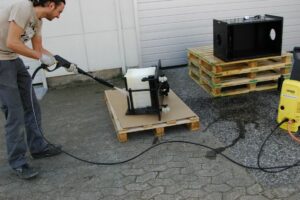
Calorplast designed an integrated all-plastic biogas heat exchanger that handles both cooling and reheating in one unit. The plastic module is completely corrosion-proof, ideal for aggressive gas environments, and the robust housing design simplifies handling and maintenance. The modular configuration supports long-term durability and reliable performance in compact biogas systems.
Result
The customer now operates a low-maintenance, long-lasting biogas treatment solution, achieving efficient H₂S and ammonia removal with minimal downtime. Calorplast’s exchanger allows clean, fuel-ready biogas generation in small-scale operations.


