Case Study #8: Acid-Resistant Cooling for Solar Cell Production
Initial situation
In solar cell manufacturing, one key production step involves etching silicon wafers using highly concentrated mixed acid, a combination of hydrofluoric acid (HF) and nitric acid (HNO₃). This chemical reaction is highly exothermic, rapidly increasing the temperature of the acid bath. As temperature rises, so does the reaction rate, potentially leading to uncontrolled reactions and safety risks.
To stabilize the process, the acid mixture must be continuously cooled. However, most common materials, including metals and glass, are not chemically resistant to this aggressive acid combination.
Challenge
The customer required a metal-free, highly chemical-resistant heat exchanger capable of withstanding the harsh environment created by hydrofluoric and nitric acid. The solution needed to be compact and compatible with installation in wet benches, where the etching takes place.
Solution
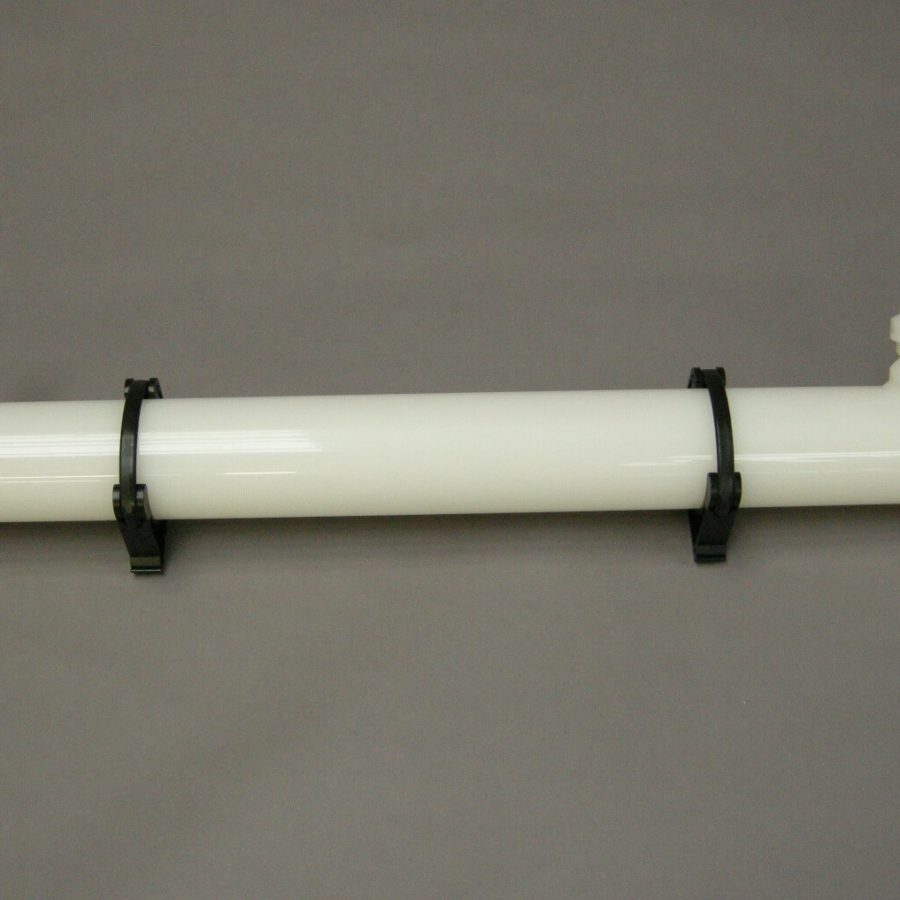
Calorplast delivered an all-plastic shell-and-tube heat exchanger constructed entirely from PVDF (polyvinylidene fluoride). The system circulates the aggressive acid through PVDF tubes while using cooling water on the secondary side to control temperature. This setup offers:
-
Excellent resistance to HF/HNO₃ acid mixtures
-
Reliable heat exchange with no metal contamination
-
Long service life and safe operation in compact wet bench systems

Result
Since 2006, Calorplast PVDF heat exchangers have been reliably used in wet benches for solar cell production. They continue to provide stable temperature control, enhanced process safety, and corrosion-free performance in one of the industry’s most aggressive chemical environments.