Case Study #7: Ventilation for Livestock Facilities
Initial situation
Modern livestock facilities rely on forced ventilation to regulate air quality. However, this system creates challenges: in winter, barns become too cold; in summer, temperatures can spike due to heat from both the environment and the animals themselves. These extreme conditions increase the risk of illness, leading to greater reliance on medication and reduced animal welfare.
While technically possible, heating or cooling the entire airflow with conventional HVAC equipment is energy-intensive and cost-prohibitive due to the size of barn structures.
Challenge
The goal was to precondition the fresh air entering the barn, preheating in winter and precooling in summer, without relying on high energy consumption. The heat exchanger needed to be:
-
Highly resistant to corrosive, contaminated barn air
-
Low-maintenance
-
Scalable for large surface installations
-
Compatible with stable hygiene standards
Solution
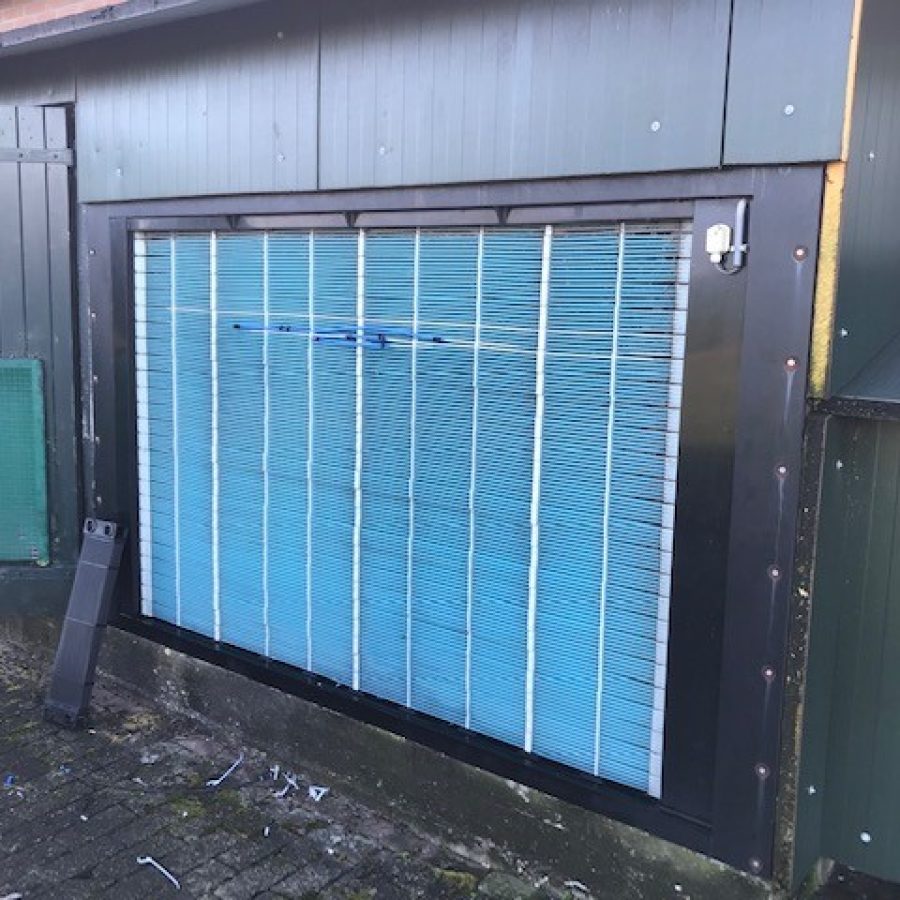
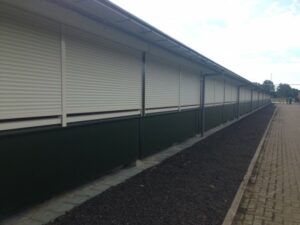
Calorplast provided a gas-to-liquid heat exchanger made entirely from polyethylene (PE), a fully corrosion-resistant plastic. The modular design enabled the system to be installed in large surface areas, such as:
-
Side walls of barns
-
Foundation-to-sheet pile interfaces
-
Ventilation gates and fresh air intakes
This setup used groundwater, which maintains a constant temperature year-round (approx. 10–15°C / 50–59°F), as the thermal exchange medium.
Result
In winter, the system preheats cold outdoor air before it enters the barn, reducing the need for additional heating. In summer, it cools overheated incoming air, promoting a healthier environment for the animals. As a result, animal comfort improves, the risk of illness drops, and energy costs remain low, making this a sustainable solution for stable climate control.