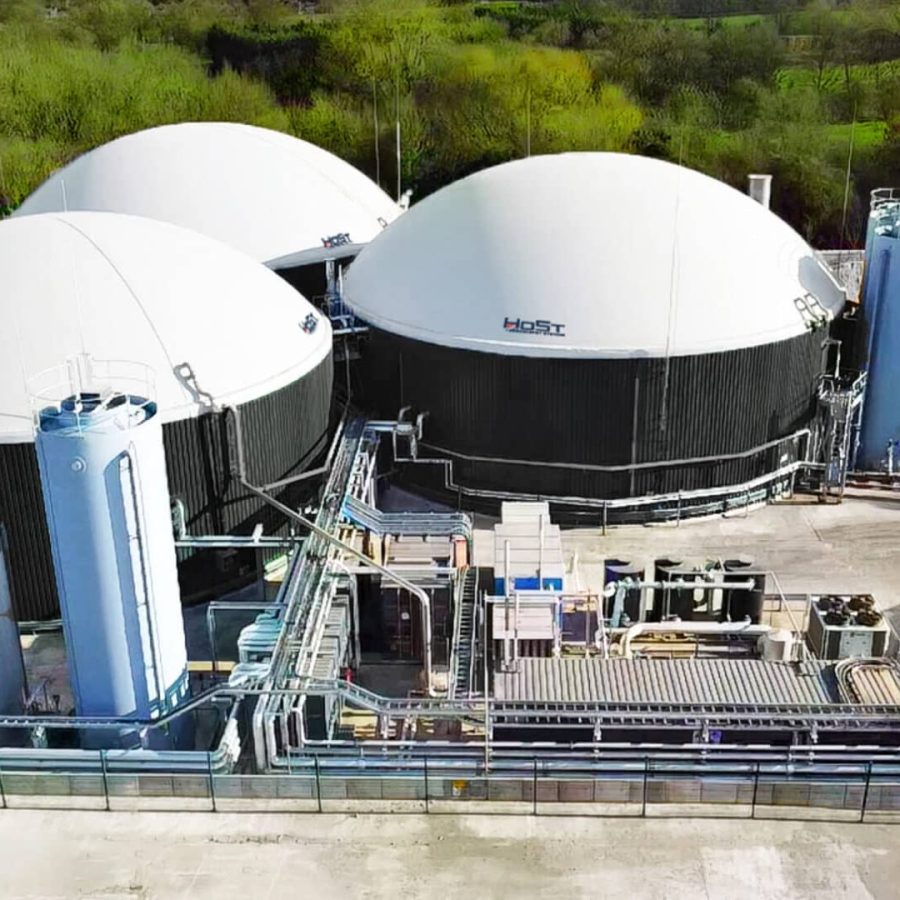
Case Study #13: Biogas Desulfurization
Initial situation
Biogas production generates hydrogen sulfide (H₂S), a highly toxic and corrosive gas formed in the fermenter. If not removed, this contaminant leads to increased operating costs in combined heat and power (CHP) units due to accelerated wear on spark plugs, oil degradation, and corrosion-related maintenance. Additionally, combustion of H₂S produces sulfur dioxide, which combines with moisture to form sulfurous acid, a harmful pollutant even at low concentrations.
Challenge
The hydrogen sulfide concentration in the biogas must be reduced to below 100–250 ppm before reaching the CHP engine. This is typically achieved using a biological gas scrubber, which requires precise thermal control of the washing solution to operate efficiently. Any heat exchanger used must be highly corrosion-resistant and compatible with aggressive chemical environments.
Solution
Calorplast provided a tube plate heat exchanger constructed from PE-RT or PVDF, both materials chosen for their excellent resistance to aggressive chemicals and thermal stability. The exchanger heats the scrubbing liquid to maintain the exact process temperature required for optimal hydrogen sulfide removal.

Result
Calorplast heat exchangers are now used in biogas desulfurization systems worldwide. Their corrosion-resistant plastic construction ensures long service life, minimal maintenance, and reliable performance in demanding environments, making them a trusted choice in the renewable energy sector.