Case Study #5: Corrosion-Free Exhaust Air Cooling in Food Processing
Initial situation
In modern food processing facilities, effective waste management includes the treatment of biological by-products using thermal and biological methods. These processes generate warm, humid exhaust air that must be cleaned and dehumidified to prevent pollutants and vapors from being released into the environment.
One such challenge comes from bio-regenerators, which discharge high-volume exhaust air at around 40°C (104°F) with high humidity. This exhaust must be cooled and dehumidified efficiently. Additionally, the recovered sensible and latent heat presents an opportunity for energy recovery in other systems.
Challenge
Ventilex B.V. supplied an exhaust air treatment system for a large sausage factory in Russia. Due to corrosive substances in the exhaust stream, metallic heat exchangers were not viable, they would corrode quickly and cause system failure. Any interruption in exhaust air treatment would result in expensive production downtime, so the heat exchanger needed to be:
-
Completely corrosion-resistant
-
Custom-built for high flow rates
-
Efficient enough to support heat recovery goals
Solution
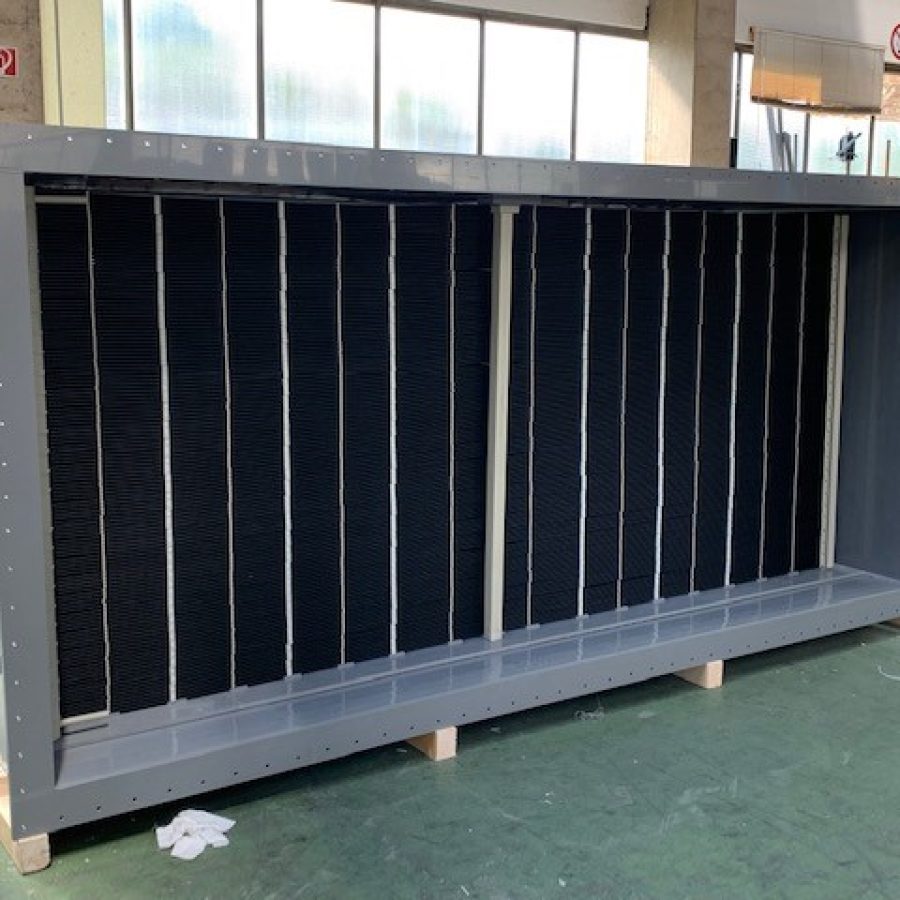
Calorplast delivered a gas-to-liquid heat exchanger made entirely of polypropylene (PP), a proven plastic material resistant to corrosive gases. The unit was custom-sized and designed for this application and easily mounted to the bio-regenerator for seamless integration.
Result
The system handles an exhaust air volume of 100,000 m³/h and delivers up to 1.8 MW of recovered thermal energy, which is redirected into preheating incoming air. Based on annual operating conditions, the system contributes to an estimated CO₂ savings of 1,800 tons per year, offering both environmental and operational benefits.